
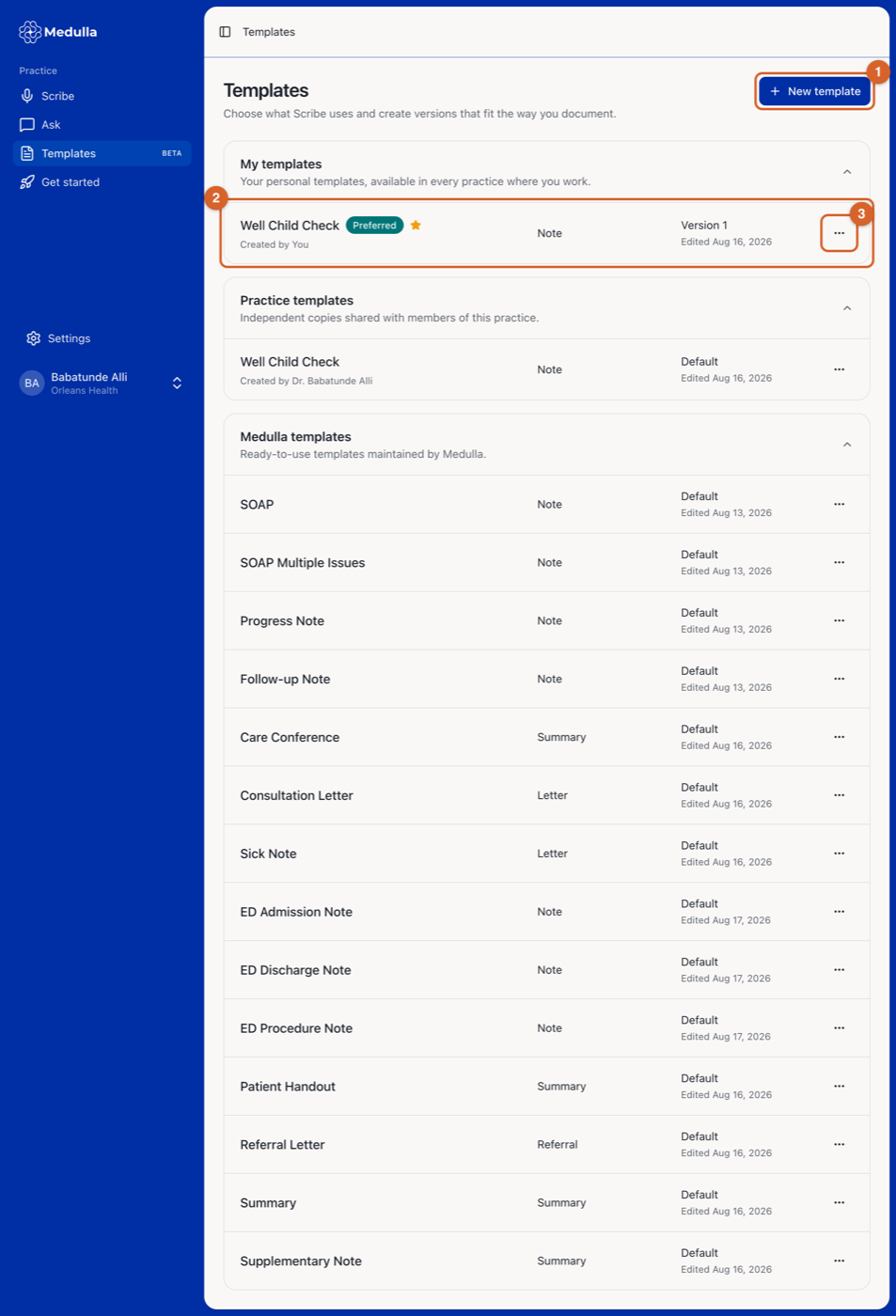
Medulla ships with a set of templates covering the documents most clinics produce. This is what each one is for. You can also build your own — see How to create and use templates in Medulla.
Notes
Note templates shape the clinical note generated from the encounter. You pick one before you record, and you can regenerate the note into a different one afterwards.
SOAP — the standard four sections: Subjective, Objective, Assessment, Plan. The default, and the right choice for most visits.
SOAP Multiple Issues — the same four sections, but the subjective is organised by chief complaint, with each issue kept separate. Use it when a patient brings several unrelated problems to one visit.
Progress Note — built around change over time: reason for follow-up, progress since the last visit, current status, response to treatment, assessment, pending items, and next steps.
Follow-up Note — a shorter follow-up format: response to the prior plan, current concerns, assessment, plan.
ED Admission Note — a full emergency admission workup, from chief complaint and history through examination, investigations, ED course and admission plan.
ED Discharge Note — the same structure, ending in a discharge plan instead.
ED Procedure Note — for a procedure rather than a visit: indication, pre-procedure assessment, what was performed, personnel, analgesia and sedation, complications, outcome, and post-procedure instructions.
Referral
Referral Letter — a letter to a specialist covering the reason for referral, a relevant clinical summary, and the assessment you are requesting.
Summaries
Summary templates are generated from the finished note rather than the transcript.
Patient Handout — written for the patient: what was discussed, their plan, and when to seek help. Generated automatically for every session.
Summary — a compact clinical summary: context, key findings, assessment and plan.
Supplementary Note — for adding to an existing record: additional context, additional findings, follow-up actions.
Care Conference — a record of a team meeting about a patient: attendees, clinical summary, discussion points, action items and follow-up.
Letters
Consultation Letter — a reply to the referring provider: consultation summary, impression, recommendations. For when you were the consultant.
Sick Note — certifies the patient was assessed, with a work and activity recommendation.
The generic Consultation Note has been withdrawn. If you used it, the ED templates cover hospital work and the Consultation Letter covers replies to a referring provider.
Choosing between them
A routine visit with one problem: SOAP.
A visit with several unrelated problems: SOAP Multiple Issues.
Reviewing a patient you are already treating: Progress Note for a full review, Follow-up Note for a brief one.
Emergency work: the ED template matching what you did.
Anything you send to someone else: a Referral or Letter template, generated after the note is finished.
If none of them match how you document, build your own. A custom template is a name, some headings, and a sentence about what belongs under each.